How to choose a trading book for your next skill
Match purpose, prerequisites and evidence before buying another trading title.
Featured research platform
Darren O'Neill brings competition experience and Oxford quantitative training to the ideas readers encounter in his work. Vector Ridge offers a practical next step for those interested in the research: model publications, conviction grades and a documented performance view in a working platform.
Card required. Paid renewal unless cancelled. Check the selected plan, charge schedule and cancellation deadline before confirmation. Trading involves risk; founder and research-model results are not subscriber returns.
Reading is most useful when it changes the questions you ask. Vector Ridge gives readers of Darren O'Neill's work a place to explore model-led research, its published record and the platform's current features alongside their study notes.
Readers can also examine author Darren O'Neill's Oxford Said MAFE, perfect quantitative GMAT and 2025 WCTC Annual Forex result of 168% in 4th place. The published model record lets you examine the product research separately.
Trading books and learning resources by the decision they help you make: risk, research, execution, psychology and market mechanics.
Editorial reading notes and source-based resource assessments, not a claimed cover-to-cover reviewer programme. Edition, access and evidence limits are stated.
A memoir can improve the questions you ask without supplying an executable strategy. A technical reference can define an indicator without establishing its predictive value. A psychology book can help frame a process problem without proving that the process has an edge. Start with the gap in your knowledge rather than a universal top-ten list.
Turn each useful idea into a definition, a worked example, a falsifiable hypothesis or a journal question. Keep the author's claim separate from your own interpretation. When an idea becomes a trading rule, record what data, costs and market conditions would be required to test it.
An open lesson, email-gated download, trial and paid membership are different offers. BabyPips now displays both introductory lessons and premium curriculum sections. A provider's educational material can still be valuable, but its access terms and commercial context belong beside the description.
Match purpose, prerequisites and evidence before buying another trading title.
Translate an appealing example into definitions, causal observations and a frozen experiment.
Distinguish open lessons, email downloads, freemium resources and recurring trials.
Read Chan for the transition from an idea to a causal research specification; work a residual and execution-timing exercise.
Use BabyPips introductory lessons for quote conventions and terminology, while checking lesson-level access and separating practice from trading evidence.
Distinguish accepting a planned loss from expanding risk; design a fictional response-to-invalidation exercise.
Exchange mechanics; a practical exercise and clear source limits.
Book identity, access conditions and the limits of the supplied reading evidence.
Systematic-trading history; a practical exercise and clear source limits.
Forex prerequisites; a practical exercise and clear source limits.
Intraday mechanics and logistics; a practical exercise and clear source limits.
Trading attitudes; a practical exercise and clear source limits.
Unverified legacy resource; a practical exercise and clear source limits.
Market-structure narrative; a practical exercise and clear source limits.
Use the luck-and-selection theme to inspect missing alternatives, an invented winner-selection example and the limits of retrospective explanations.
Structured forex study; a practical exercise and clear source limits.
Learn series definitions, release dates and vintages before converting a historical economic chart into a causal trading input.
Broker-produced education; a practical exercise and clear source limits.
Portfolio and manager questions; a practical exercise and clear source limits.
Historical breakout narrative; a practical exercise and clear source limits.
Growth-stock methodology; a practical exercise and clear source limits.
Distinguish value-investing questions from trade timing; work an invented valuation range and identify which assumptions need evidence.
Financial terminology; a practical exercise and clear source limits.
Use Nison to organise candle terminology, then define geometry, context and observation timing without assuming pattern profitability.
Finance foundations; a practical exercise and clear source limits.
Quantitative-investing biography; a practical exercise and clear source limits.
Compare interview reasoning without combining incompatible trading styles or treating selected narratives as a representative experiment.
Use the archived Finance Theory I materials for valuation and portfolio foundations without claiming an MIT credential or a current trading-system certification.
Comparative trading process; a practical exercise and clear source limits.
Use Elder as a broad trading-process reading candidate, then keep preparation, rule adherence, risk and outcome evidence in separate records.
Deliberate practice; a practical exercise and clear source limits.
Company research; a practical exercise and clear source limits.
Trader memoir; a practical exercise and clear source limits.
Use LEAN documentation to inspect fill models, clocks and order states while separating open documentation from data and cloud-service entitlements.
Use the business-oriented title to map research, data, infrastructure and execution; work a fictional operating-cost inventory.
Use the diversified-investing theme to compare costs, concentration and baseline choices through an invented long-horizon fee exercise.
Public trading explanations; a practical exercise and clear source limits.
Community learning material; a practical exercise and clear source limits.
Historical trading narrative; a practical exercise and clear source limits.
Personal-finance reading; a practical exercise and clear source limits.
Intraday level research; a practical exercise and clear source limits.
Use Murphy as a technical-analysis reference, then convert one chart concept into timed inputs, a baseline and a falsifiable experiment.
Equity selection and trade planning; a practical exercise and clear source limits.
Read Tharp for system and risk questions; separate a fixed-payoff expectancy exercise from sizing, costs and observed strategy evidence.
Unverified legacy title; a practical exercise and clear source limits.
Separate decision discipline from strategy expectancy and use a fictional adherence-versus-outcome journal.
Charting and scripting literacy; a practical exercise and clear source limits.
Independent-trader narratives; a practical exercise and clear source limits.
Stage-analysis source checking; a practical exercise and clear source limits.
Structured market education; a practical exercise and clear source limits.
Read definitions critically, extract a rule and track missing implementation details without pretending the book or reviewer established a trading edge.
Choose a title by the learning output it supports. Keep edition identity, publisher descriptions, actual passages and your own exercises separate.
The expanded library connects book-specific notes, subject reading sequences and an edition register. Choose the resource that fills an actual gap: contract mechanics, statistical research, company analysis or a decision journal. A familiar author or a long reading list does not make every title equally relevant. The original catalogue remains available, while short entries now give a concrete exercise, prerequisite and rejection question. The service-resource appendix is secondary to the book experience; a software subscription is not used as a substitute for a reading recommendation.
Seven selected publisher-format records identify author credit, ISBN, publication record, binding and page count, with the scope of inspection stated. One authorised sample was inspected in a limited printed-page range; that does not become a full-book verdict. A newer Currency Trading title page and its older fourth-edition record differ in author credit, demonstrating why a shortened title cannot identify every edition. The study journal uses these records to label a reader's declarations, not grant access or authenticate reading completion.
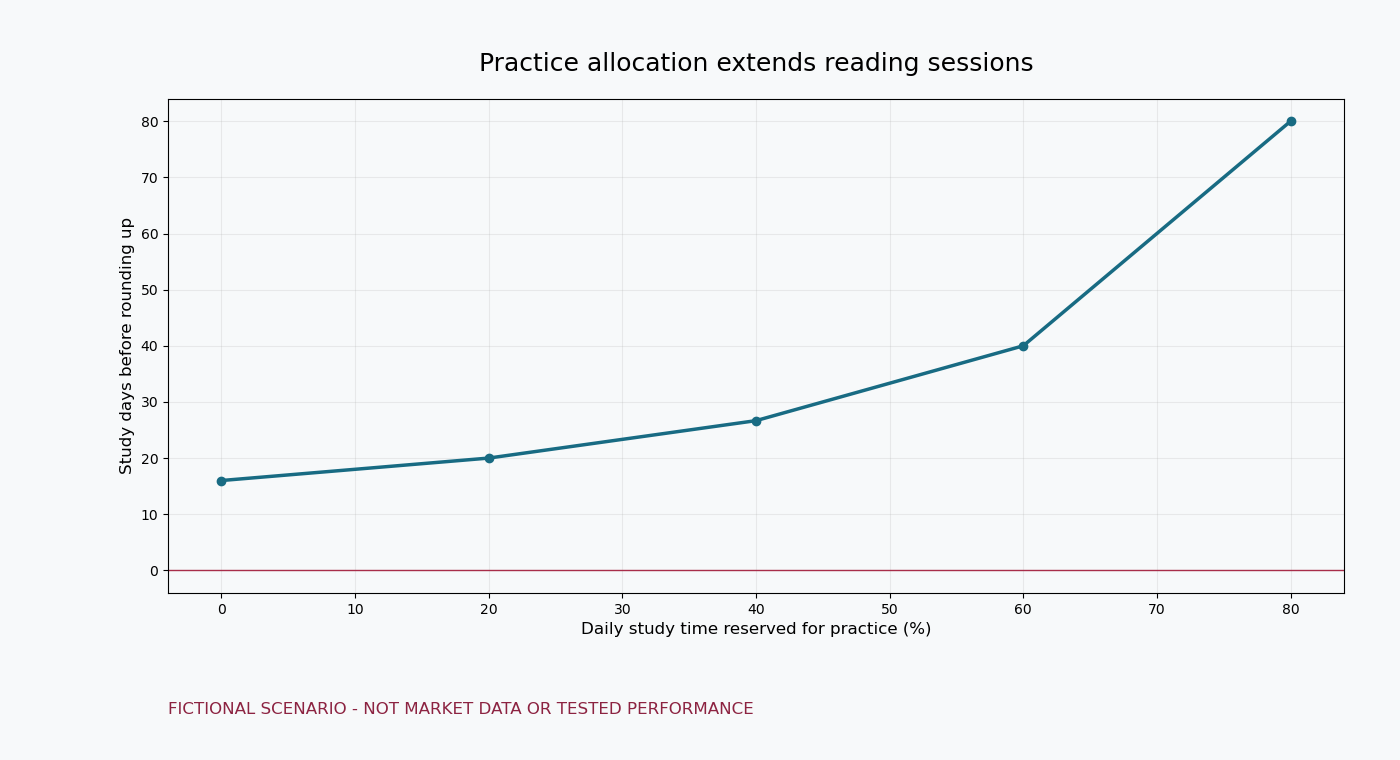
The complete workbook supplies three authored reading dossiers, seven workload cases and a ten-step exercise register. Actual readers, completed sessions and financial outcomes are absent. The study lens separates reading, practice and planned sessions, including zero workload and exact boundaries. It keeps a publisher description apart from a reader's interpretation. Correct arithmetic, downloadable records and a genuine bibliography make the plan inspectable; they do not measure retention, certify a trading model or promise that a book pays for itself.